
Texas gives you a long swim season, but not an endless one. By late October, the pool is getting cooler, the evenings are getting crisp, and the one spot everyone wants to be is somewhere warm.
That is the moment a lot of homeowners realize they wish they had a spa. If you are planning a custom pool, this is the best time to decide, because adding a spa at the design stage is far easier and far less expensive than trying to squeeze one in later.
Here is how pool and spa combinations actually work, what the different styles look like, what they add to a project, and how to decide whether one belongs in your backyard.
What Is a Pool and Spa Combo?
A pool and spa combo is a custom pool with a built-in spa, designed as one connected structure. Instead of buying a separate hot tub and setting it on the patio, the spa is built right into the pool design, usually out of the same gunite and finished with the same tile and stone.
There are two main ways to do it.
Spillover spa
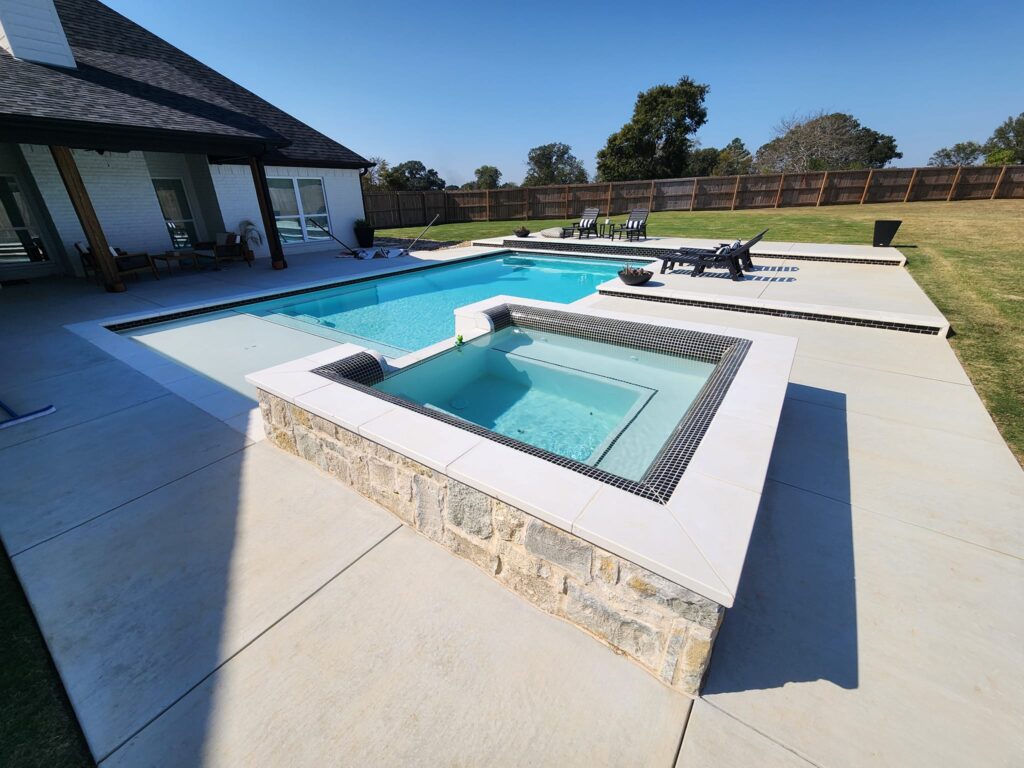
This is the classic, and the most popular choice in custom builds. The spa sits slightly higher than the pool, typically 6 to 12 inches, and when you want it, warm water spills over a ledge into the pool in a small waterfall. When you turn the spillover off, motorized valves isolate the spa so only that small volume of water is heated.
A standard round spa holds only a few hundred gallons, compared with well over ten thousand in the pool itself, which is why it can heat up in a fraction of the time and cost of warming the whole pool. Depending on heater size, many spas reach soaking temperature in roughly 20 to 60 minutes.
Attached spa without the spillover
If you like the integrated look but not the waterfall, the spa can sit beside the pool as its own raised or at-grade feature, sharing the same equipment but with a clean separation between the two. This option works especially well when the spa and pool are different heights, or when you want a quieter space for relaxing.
Both styles share the pool’s filtration and pumps, which keeps the mechanical setup simpler than running two separate systems.
Why Texas Homeowners Add a Spa
You use the backyard more months of the year. A heated spa extends your season on both ends. Cool spring mornings and chilly fall evenings are exactly when a spa shines, and Texas winters are mild enough that a warm soak outdoors is very doable on most nights.
It is the best seat in the yard. Many families end up using the spa more often than the pool. It is where people gather after a swim, where adults unwind at the end of the day, and where a kid-free conversation naturally happens.
It anchors the design. A raised spa with a spillover creates a focal point, adds the sound of moving water, and gives the whole backyard a sense of purpose. Paired with a tanning ledge, it builds a multi-level lounging area that makes even a modest pool feel like a resort.
It works in small yards too. A spa adds a lot of function for very little footprint. If you are working with a compact lot, see our guide to small backyard pool ideas for Texas.
What a Spa Adds to Your Project
Costs vary widely with size, finishes, and equipment, and different builders quote different ranges, so treat any published number as a ballpark rather than a promise. As a general guide, adding a spa to a new custom pool commonly adds somewhere in the range of $10,000 to $30,000 or more, depending on how it is built.
A simple shared-water spa with basic finishes sits at the lower end. A larger spa with custom tile, stone facing, more jets, and a dedicated pump sits at the higher end. Retrofitting a spa into an existing pool usually costs significantly more than building it in from the start, since it means cutting into finished work and re-engineering the plumbing and equipment.
Things that move the price:
- Spa size and shape
- Number of jets and whether it has a dedicated booster pump
- Tile, stone, and finish choices
- Heater size and type
- Whether you want a spillover, a raised wall, or a flush design
- Lighting, automation, and any added features like a fire element nearby
For the bigger picture on pricing, see our 2026 custom pool cost guide.
Spa Features Worth Considering
Jets. Basic spas have around 6 to 8 jets. Upgraded designs go to 12 to 16 or more, with different jet types targeting different areas. A dedicated booster pump gives the jets real pressure instead of a gentle bubble.
Seating. A good spa has seats at different depths so people of different heights are comfortable. This is a detail worth paying attention to in the design stage.
Heating. A properly sized heater is what makes the spa practical. Undersized heaters make the spa a chore, and a well-sized one makes it ready when you are. Ask your builder how the heater is sized and how long heat-up will actually take.
Lighting and sound. Soft lighting in and around the spa makes it a nighttime destination, and the gentle sound of a spillover adds to the atmosphere.
Automation. Controls that let you start the spa from your phone, so it is warm when you step outside, are one of the most loved upgrades.
Gunite Spa vs a Portable Hot Tub
A freestanding hot tub is simpler and cheaper up front, and it can make sense for some homes. But a built-in gunite spa is a different category.
It is permanent, fully custom, and matches the pool in tile, stone, and shape. It does not rattle, crack, or look like an appliance sitting on a pad. It is built into the structure of the backyard, so it adds to the design rather than competing with it, and it can be shaped to fit your exact space.
If you are weighing material choices for the pool itself, our gunite vs fiberglass vs vinyl guide covers how each type handles features like spas.
What to Know About Maintenance
A spa is smaller than a pool, so its water chemistry can change faster, and a few things are worth knowing about upfront.
The spillover edge is a place where mineral scale can build up over time, so it is worth keeping the spillway surface clean. Moving water also aerates the pool, which can slowly nudge pH upward, so water balance matters, especially if you run the spillover often.
We focus on designing and building your pool and spa, and we do not provide ongoing maintenance service. When your project is complete, we are glad to connect you with trusted local companies who do.
Permits, Safety, and Soil
A built-in spa is part of your pool project, and it gets permitted along with it. Requirements vary by city, so your builder should walk you through what applies at your address.
Spas also fall under the same barrier and safety requirements as the pool in most cities. Our Texas pool safety and fence guide covers what to plan for.
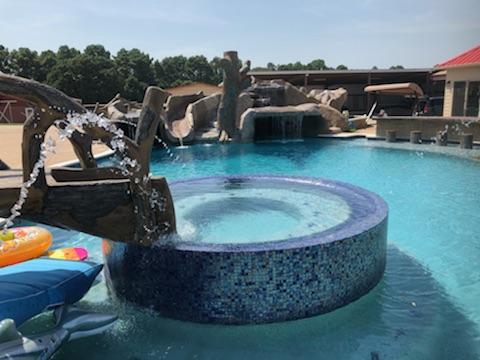
And as with the pool itself, soil matters. Much of North Texas sits on expansive clay, and a raised spa adds weight and structure that has to be engineered properly. That is exactly the kind of detail to ask about when you choose a pool builder.
Does a Spa Add Home Value?
A well-designed pool adds value in most Texas markets, and a spa often strengthens that, particularly in higher-priced neighborhoods where buyers expect a spa to come with a pool. Exact figures depend on your neighborhood and your home, so treat any percentage you read online as a general indication. The bigger return is in how often you use it.
Why Plan the Spa Now
If you are thinking about building, fall is an excellent time to start. Our best time to build a pool in Texas guide explains why, and a spa is one of the easiest things to include when the design is fresh. Decide now, and you are enjoying that warm soak next fall instead of watching someone else’s.
What You Get With Blue Canyon Pools
We build spas as part of custom gunite pool projects, designed around your yard and your vision. With 21 years and more than 800 pools behind us, a crew we have trusted for over 15 years, and coping stone 3 to 3.5 inches thick, nearly double what many competitors use, every detail is built to last. Our typical build runs about six weeks from start to finish, and we offer financing options to make the numbers work.
Frequently Asked Questions
What is a spillover spa? A spillover spa is a raised spa connected to a pool, designed so heated water can cascade over a ledge into the pool. The spa shares the pool’s equipment and can be isolated so only the spa water is heated.
How long does a pool spa take to heat up? Many spas reach soaking temperature in about 20 to 60 minutes, depending on the heater size and starting water temperature.
How much does it cost to add a spa to a new pool? Commonly somewhere around $10,000 to $30,000 or more, depending on size, finishes, jets, and equipment. Retrofitting a spa into an existing pool usually costs significantly more.
Is a built-in spa better than a hot tub? A built-in gunite spa is permanent, fully custom, and matches the pool, while a portable hot tub is cheaper and simpler. The right choice depends on your budget, your space, and how you want the backyard to look.
Can a spa be added to an existing pool? Yes, but it is usually more complex and costly than building it in from the start. Planning the spa during the design of a new pool is the most cost-effective approach.
Do I need a separate fence or permit for a spa? In most cities, a built-in spa is permitted together with the pool and falls under the same safety barrier requirements. Check with your local building department for requirements at your address.
Ready to Design Your Pool and Spa?
A spa turns a backyard pool into a place you can enjoy for most of the year. Let’s design one that fits your space and how you actually live.
Blue Canyon Pools serves East Texas out of White Oak and the DFW area out of Bartonville, including Southlake, Flower Mound, Trophy Club, and Colleyville. Call 903.399.2275 or reach out through our website to book your free design consultation.
Leave a Reply